Most brands struggle with the idea of product seeding, but they often do so because of the execution. You know, sending products to creators works. What's less clear is how to do it without wasting budget on the wrong people, chasing follow-ups that go nowhere, or ending up with a pile of content nobody can measure.
If you're at this stage, you've probably already asked yourself a few of these:
Which creators should we actually send products to?
How many creators do we need for the campaign to be worth it?
Should we expect a post in return, or is that not how this works?
How do we demonstrate ROI to the person who signs off on the budget?
A product seeding or barter campaign that actually works needs more than a shipping label and a hopeful email. It requires a plan that encompasses creator selection, outreach that doesn't sound like a template, logistics that don't fall apart at scale, and a way to track the result.
This is why, being a top barter influencer marketing agency in India, we have curated this guide to walk through the full execution framework, from budgeting to measuring results, so you're not figuring it out mid-campaign.
One stat worth keeping in mind before we start: 49% of consumers purchase at least once a month directly because of influencer content (Sprout Social Influencer Marketing Report). That's why brands continue to invest in creator-led campaigns rather than treating them as a one-off experiment, and it's precisely why getting the execution right matters more than the idea itself.
Therefore, GRYNOW exists largely because this gap between idea and execution is where most campaigns quietly fail.
Product Seeding Campaign Checklist: Before You Begin
Skipping these three steps without a clear understanding of what is product seeding is the single most common reason product seeding campaigns for small brands fall apart halfway through.
Define Your Campaign Objective
Be specific about what you're actually trying to get out of this. Just "More visibility" isn't an objective; pick one:
- UGC you can reuse in ads and on your product pages
- Supporting a product launch
- Honest reviews from real users
- General brand awareness among a new audience
- Direct sales through trackable links or codes
Your objective changes almost everything downstream, who you approach, what you send, and how you measure success.
Set Your Campaign Budget
Product seeding isn't free just because you're not paying for posts. Account for:
- Product cost (and how many units you're realistically sending out)
- Shipping, especially if you're working with creators outside your country
- Packaging and any custom inserts
- Creator incentives, if you're supplementing seeding with paid partnerships
- Tools for tracking outreach, deliveries, and content
Decide Your Timeline
Give each phase its own window instead of adjusting everything into "a few weeks":
- Outreach and creator confirmation
- Shipping and delivery
- Content creation time (creators need this)
- Follow-up window
- Reporting and wrap-up
This step-by-step explanation is very important for first-time brands that will be experimenting with product seeding.
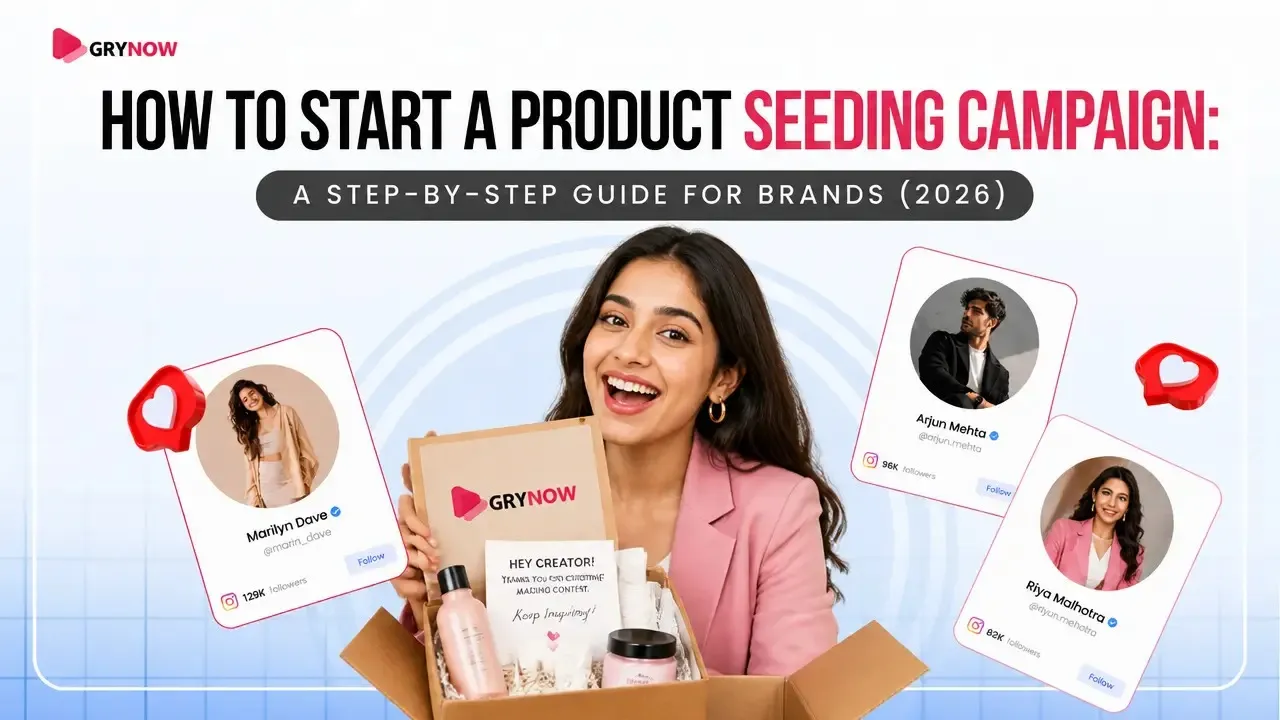
Step-by-Step Guide to Launching a Product Seeding Campaign
Step 1: Choose the Right Creators
Not every creator tier serves the same purpose:
- Nano creators (1K–10K followers) — highest trust, most authentic engagement, best for small brands with limited budgets
- Micro creators (10K–100K) — a solid middle ground of reach and engagement
- Macro creators (100K+) — broader visibility, but seeding alone rarely secures their time
How many creators should you start with?
If this is your first campaign, then 15–30 well-matched nano and micro influencers will teach you more than 100 random sends. You'll learn what works before you scale spend.
Step 2: Build a Qualified Creator List
This is where most product seeding strategies for brands go wrong because brands send products based on follower count alone. While selecting creators, always look at:
- Audience relevance to your product category
- Real engagement, not just follower numbers
- Content quality and how they shoot/edit
- Location, especially if shipping costs or regional relevance matter
- Any previous brand collaborations, and how those turned out
Step 3: Reach Out with a Personalized Pitch
This is the step people ask about most:
How do you actually pitch influencers for a free product without sounding like spam?
Brands should pick channels based on where the creator is most active, email, Instagram DM, or LinkedIn, in the case of more professional creators.
Whatever the channel, your outreach should include:
- Why did you pick them specifically (reference actual content, not a generic compliment)
- What the product is and what makes it relevant to their audience
- What you're asking for, clearly, is content, a review, or simply a gift with no strings attached
- No pressure language. Creators can tell when a "gift" comes with hidden expectations.
Step 4: Send Products Strategically
Shipping a box isn't the same as seeding a product. A few additions can turn it into an experience worth talking about:
- Branded, photogenic packaging
- A handwritten note, because this alone drives a disproportionate amount of organic mentions
- A short campaign brief, if you have specific goals
- A QR code linking to more info or your campaign hashtag
- A discount code they can share with their audience
Step 5: Give Clear Guidelines Without Controlling Creativity
Set boundaries about certain things, but don't send creators a script and a whole manual of what to do and what not to do.
Do's: Mention key product benefits, tag your brand, and use the campaign hashtag.
Don'ts: don't dictate word-for-word captions; don't ask for staged "perfect" shots that feel like ads.
Must-haves: brand messaging basics, FTC disclosure requirements, and explicit creative freedom.
Step 6: Track Deliveries and Creator Responses
Keeping a simple tracker, like a spreadsheet, is fine to start to cover points like
- Who received the product and when
- Follow-up dates and whether you've sent them
- Response rate so far
- Shipping status for anything still in transit
Step 7: Measure Campaign Performance
This is where the "did it work" question gets answered. Track everything like:
- Reach and engagement across the content produced
- Total UGC created (and how much of it is reusable)
- Website visits attributed to the campaign
- Sales and coupon code usage
- Earned Media Value (EMV)
- Overall ROI against your budget
After following some steps, there are some practices that overall make the brand stand out in such a competitive market and that are listed below.
Product Seeding Campaign Best Practices
A few habits that separate campaigns that compound over time from ones that fizzle after round one:
- Start with nano influencers before scaling to bigger names
- Personalize every single outreach message
- Never demand a positive review in exchange for a product
- Treat this as relationship-building, not a transaction
- Follow up professionally, even with creators who don't respond
- Repurpose creator content across your own channels
- Measure every campaign, even the small ones
Common Reasons Product Seeding Campaigns Fail
Rather than a generic list of product seeding campaign mistakes to avoid, here's what actually derails campaigns in practice:
Poor creator selection - Chasing follower count is the most common mistake that brands make, but also understand that follower count is just another metric, and there are other important metrics also.
Sending products without research - If a brand sends a product that doesn’t fit within a creator's niche, then automatically, their audience wouldn’t react to it.
Generic outreach — Personalized messages always stand out for the brands, and it also gives reasons to the creator to know more about the brand.
No follow-up — After sending a product, the brand has to remind the creator through emails, follow-ups, or reviews about the product; otherwise, the creator would forget very easily.
No campaign goals — If brands are sending products with no defined outcome in mind, then they can't expect creators to post simply because a product was gifted.
Product seeding is one of the most trendy and strategic ways for brands to reach their potential customers on a budget and in less time. But also, planning the whole process needs expertise and that is where influencer marketing agencies step in.
So, let’s understand if a brand needs an influencer marketing agency to plan the product seeding.
Should You Manage Product Seeding In-House or Partner with an Agency?
| BASIS OF COMPARISON | In-House | Agency |
|---|---|---|
| Speed | Slower to organize | Faster execution once set up |
| Creator network | Limited to what you can find | Large, pre-vetted creator network |
| Logistics | Manual, time-consuming | End-to-end management |
| Reporting | Often limited | Advanced analytics and tracking |
| Scale | Harder to scale | Easily scalable |
Running product seeding in-house works when you have the time, an existing creator network, and someone dedicated to managing outreach and logistics.
Most small and mid-sized brands don't have that spare capacity, which is where a partner comes in.
This is where Grynow fits in. For brands that want to scale product seeding without building an entire in-house operation, Grynow handles creator sourcing, outreach, logistics, and reporting end-to-end so you get the results of a well-run campaign without absorbing all the manual work that usually comes with it.
Conclusion
Product seeding succeeds through structured execution, not through simply sending products and hoping for the best. Brands that build qualified creator lists, personalize their outreach, streamline logistics, and track measurable outcomes consistently get more authentic content, stronger engagement, and creator relationships that last beyond a single campaign.
If managing all these moving parts starts to feel like more than your team can handle, working with an experienced influencer marketing agency can take that weight off and improve what you get out of each campaign.