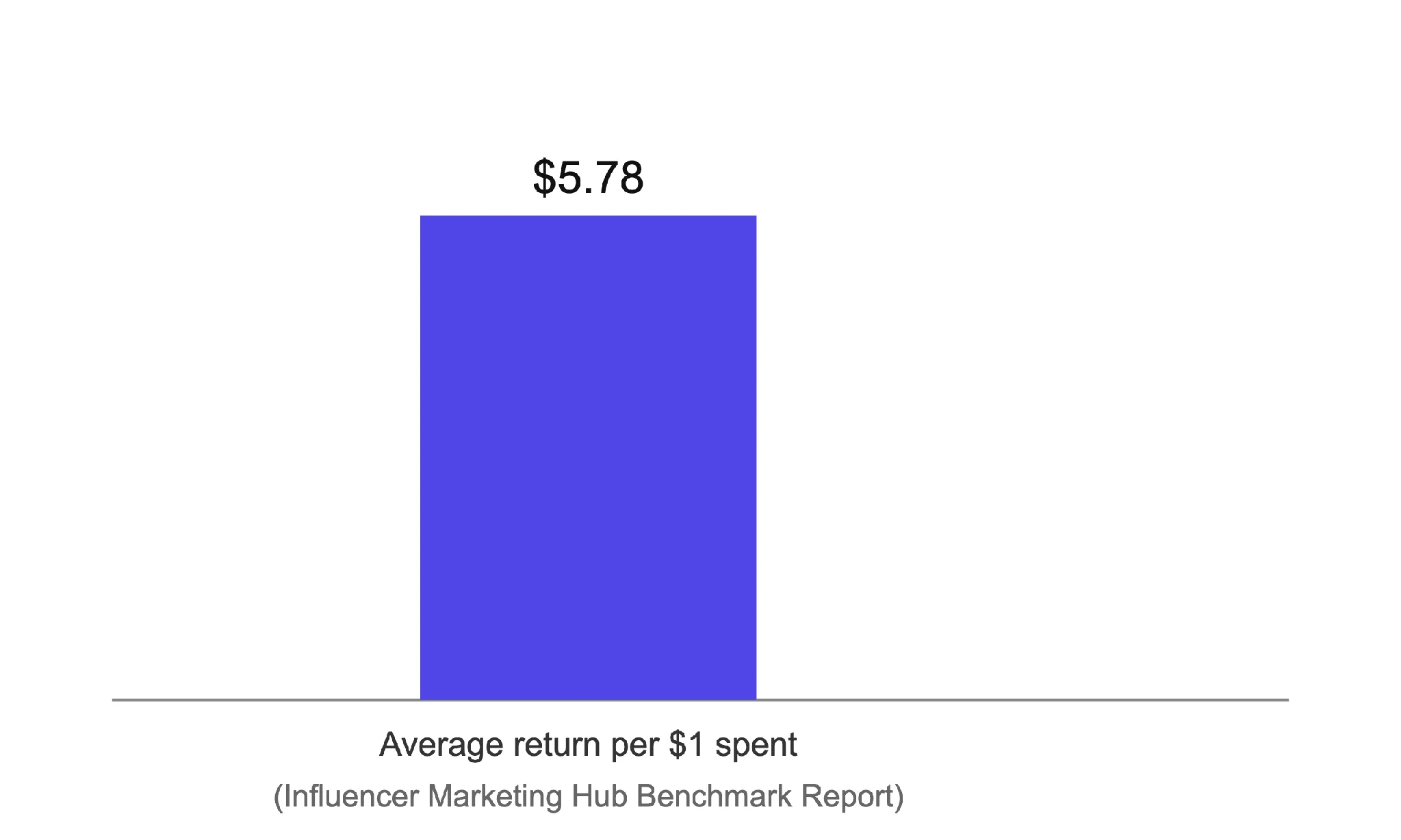
Influencer marketing now returns an average of $5.78 for every $1 spent, according to the Influencer Marketing Hub Benchmark Report. Yet most brands still can't tell you what their last campaign actually returned. The gap isn't the tactic. It's the absence of a system that connects creator selection to a business goal and then measures the result against that goal.
This guide is that system. It walks through what influencer marketing is, the four influencer tiers and when to use each, a five-step strategy from creator discovery to launch, real campaign examples, and the exact formula for calculating ROI, so that by the end you can match the right creators to a business goal instead of chasing follower counts and hoping the results follow.
What Is Influencer Marketing?
Influencer marketing is a partnership model in which a brand compensates a content creator to reach and persuade that creator's audience through content that looks and sounds native to the platform it appears on. It is not an advertisement wearing a creator's face. It's a message delivered in the creator's own voice, to an audience that already trusts that voice.
That distinction is what separates influencer marketing from both traditional advertising and classic celebrity endorsement. A television commercial interrupts an audience's attention. A celebrity endorsement borrows fame to transfer credibility, often without any real relationship between the celebrity and the product category. Influencer marketing works differently: the creator has typically built an audience around a specific interest, whether that's skincare, personal finance, or gaming, and the audience follows that creator specifically because they trust their recommendations within that niche. The brand partnership works because it fits inside a relationship that already exists.
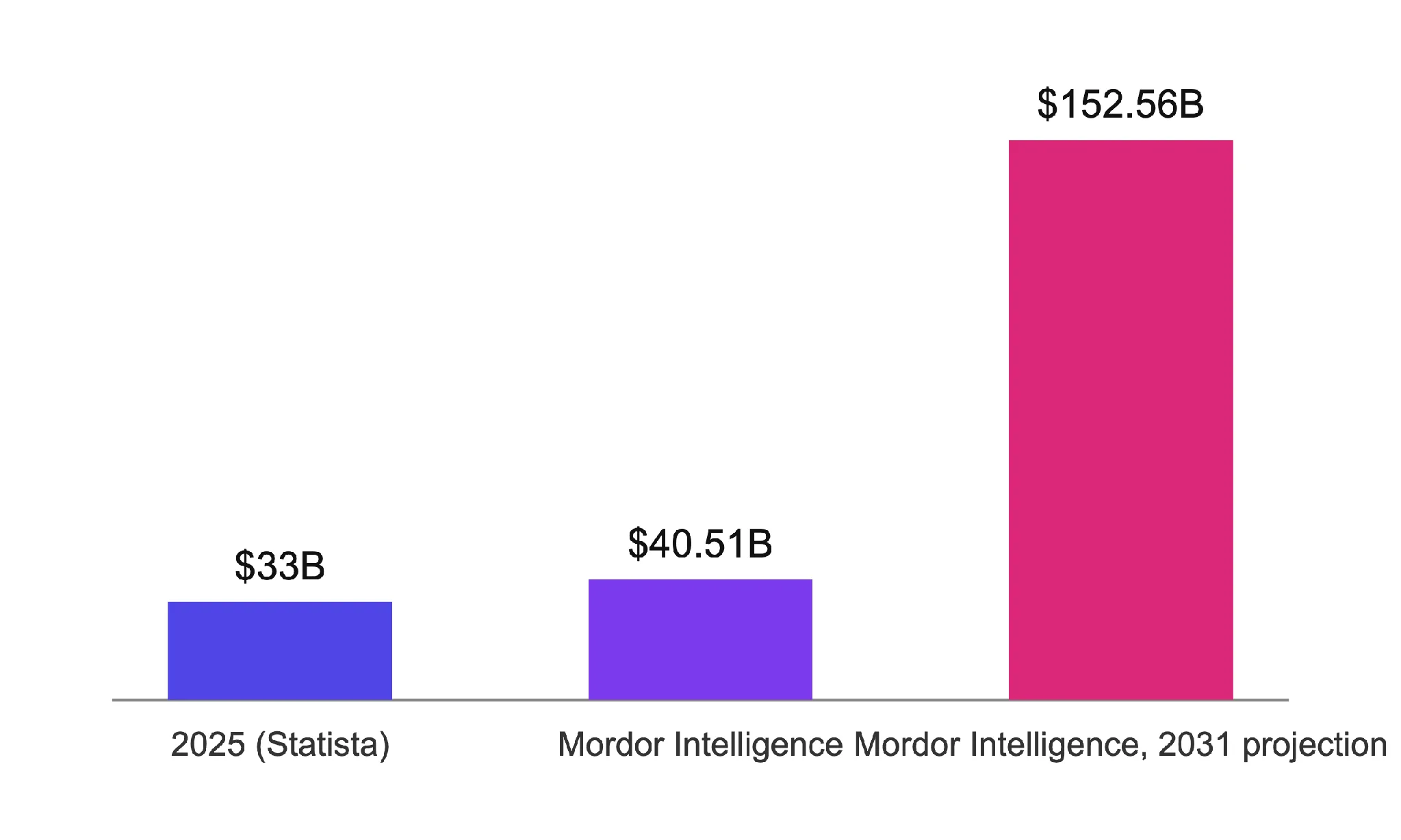
The category has grown large enough that most marketing teams now treat it as a standing budget line rather than an experiment. Statista's market-size research put the global influencer marketing market at roughly $33 billion in 2025. Mordor Intelligence, tracking the same overall market with a somewhat broader methodology, estimates it at $40.51 billion and projects it will reach $152.56 billion by 2031. The two firms count things differently, which is why the totals differ, but the direction agrees: this is a growing, mainstream line item, not a fringe tactic.
Why Influencer Marketing Works for Brands Right Now
Influencer marketing works because it converts, not just because it's popular. Consumers report acting on it directly: 86% say they've made a purchase inspired by an influencer at least once in the past year. 49% say they buy something because of an influencer post at least once a month. That data comes from the State of Influencer Marketing Report, via Sprout Social, and it's a behavioral pattern, not a vanity metric.
The mechanism behind those numbers is trust combined with targeting precision. A recommendation from a creator someone already follows carries more weight than a banner ad, because the audience has opted in to that creator's judgment on a topic. It also arrives in a feed the person chose, rather than interrupting a video they were trying to finish. Traditional ad formats face rising fatigue and blindness. A well-matched creator partnership doesn't feel like an ad in the same way, even when it's clearly labeled as one.
Marketing teams have noticed. The same Sprout Social research shows 74% of marketers plan to increase their influencer marketing budgets in 2026, and 86% of US marketers plan to partner with influencers that year, up from roughly 75% in 2022. It also finds 83% of brands rate influencer marketing as effective or very effective, with only 5% reporting a negative experience. Budgets are moving toward this channel because brands are seeing it convert, not because it's trendy.
The 4 Types of Influencers, and When to Use Each
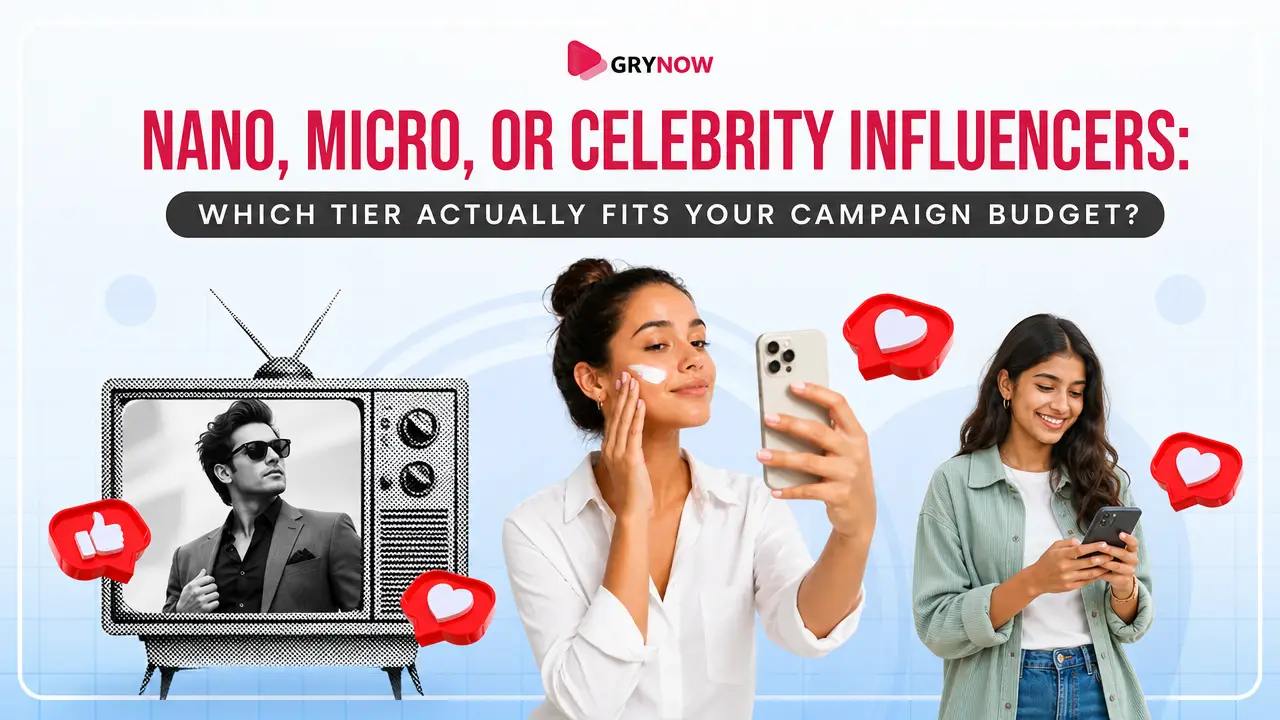
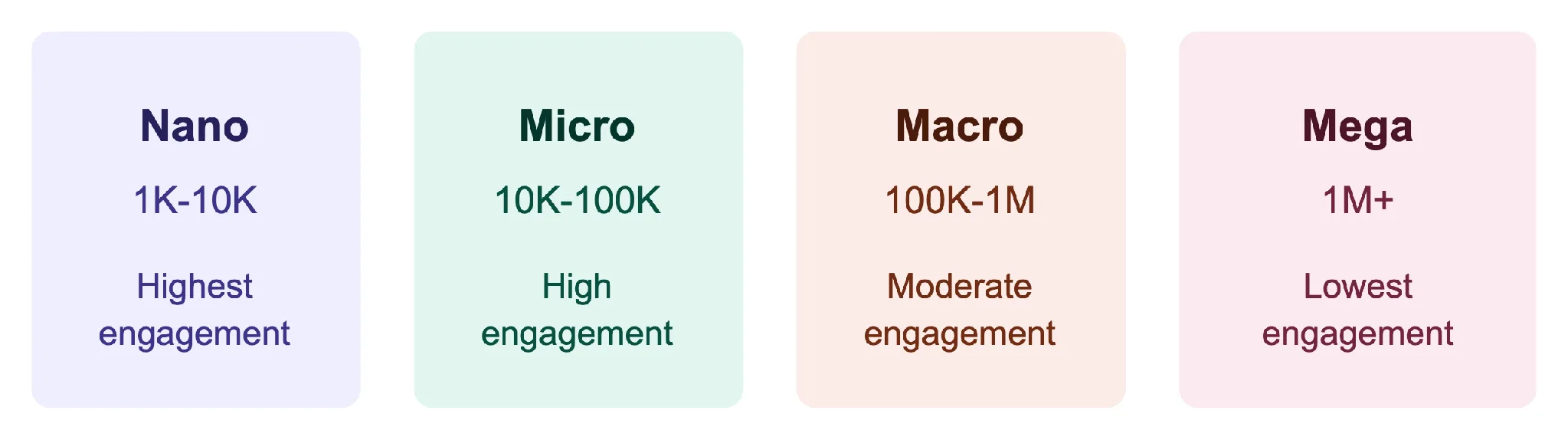
Influencer tiers break down by follower count into four groups: nano (roughly 1,000 to 10,000 followers), micro (10,000 to 100,000), macro (100,000 to 1 million), and mega (1 million-plus). Different research firms draw the nano/micro line at slightly different points, so it's worth stating the convention clearly: this guide, and Grynow's own campaign planning, uses the ranges above.
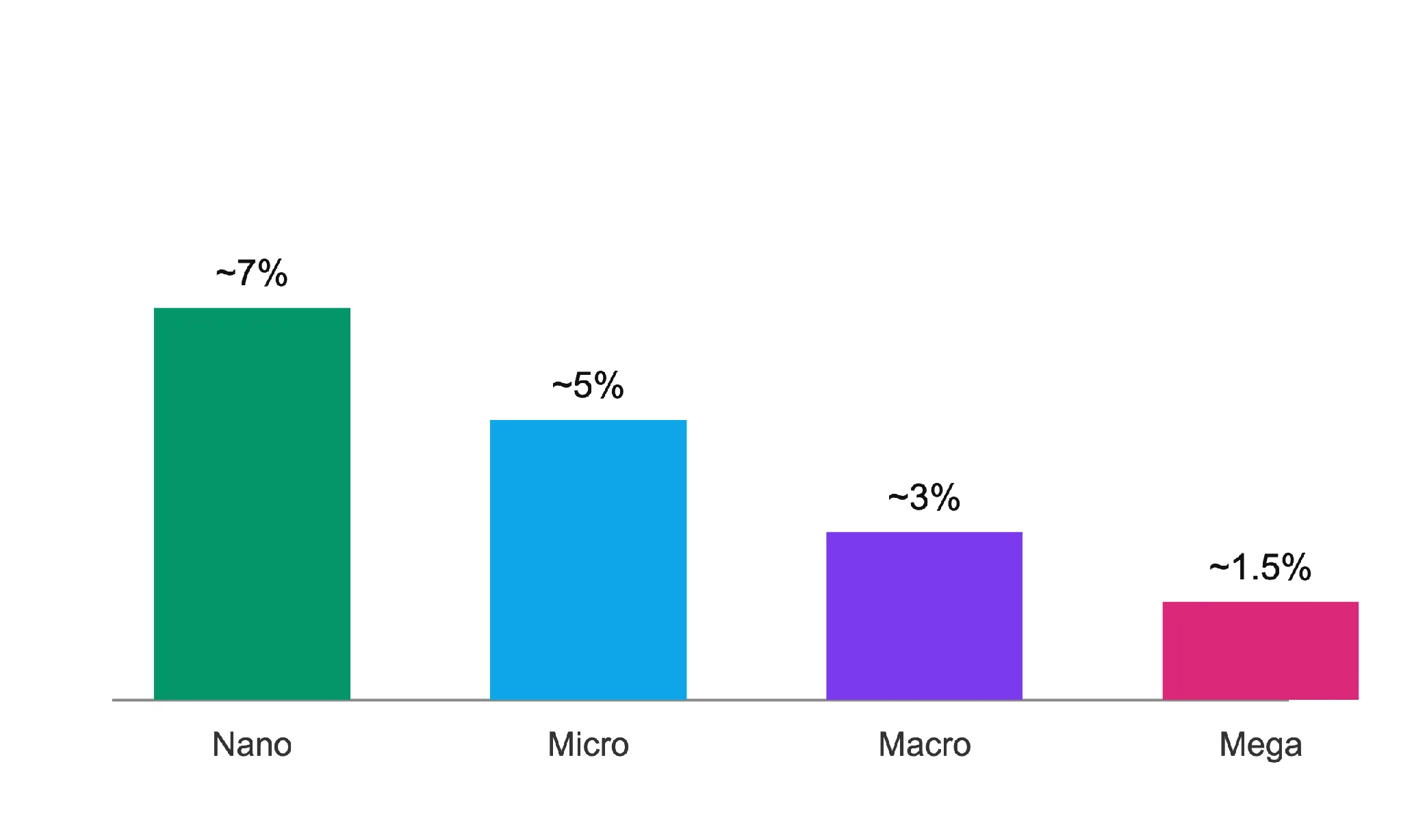
The more useful way to think about tiers isn't as a neutral taxonomy, though. It's an objective-matching decision. The question isn't “which tier has the most followers I can afford.” It's “which tier's audience relationship fits what this campaign needs to do.” Nano and micro creators typically deliver higher engagement rates and tighter-knit, higher-trust audiences, which makes them a stronger fit for conversion- and consideration-driven goals: sales, sign-ups, promo code redemptions. Macro and mega creators trade some of that intimacy for reach, which makes them a better fit when the goal is broad awareness, such as a product launch or a rebrand that needs to reach as many eyes as possible in a short window.
Nano Influencers (1K-10K Followers)
Nano creators have the smallest audiences but often the highest engagement rates, because their followers tend to be personal connections, local community members, or people who found them through a very specific shared interest. They're well suited to conversion-focused campaigns, localized launches, and situations where authenticity matters more than scale. The tradeoff is obvious: reaching a large audience through nano creators means partnering with many of them at once, which adds coordination overhead.
Micro Influencers (10K-100K Followers)
Micro creators sit at the sweet spot many brands land on for consideration and conversion campaigns: enough reach to matter, still enough intimacy with their audience to convert. This is the tier where Grynow's micro-influencer marketing services tend to concentrate for brands that want measurable performance without mega-tier budgets, because the cost per engaged follower is typically far more efficient than at the macro or mega level.
Macro Influencers (100K-1M Followers)
Macro creators bring significant reach with production quality that often rivals traditional media. They fit well when a campaign needs credibility at scale, such as a major product launch or a category-education push, where the goal is to put a message in front of a large, broadly relevant audience rather than to drive an immediate transaction.
Mega Influencers (1M+ Followers)
Mega creators, including celebrities with large followings, deliver the widest reach and the most brand-safety scrutiny, since a single post can reach millions. They're the right choice when the objective is pure awareness at national or global scale. They are rarely the right choice for a conversion-first campaign on a tight budget, because engagement rates at this tier tend to be the lowest of the four.
Reach and engagement move in opposite directions as follower count rises, and that tradeoff shows up directly in results. One frequently cited comparison found a nano influencer with roughly 8,000 followers generated 47 sales, compared to 12 sales from a macro influencer with roughly 500,000 followers (Source- IMH), in a matched campaign context. Reach alone didn't win. Fit did.
For a deeper breakdown of the different types of influencer marketing campaigns each tier tends to run best, Grynow's blog covers campaign formats in more depth than this guide's scope allows.
How to Build an Influencer Marketing Strategy: Creator Discovery to Launch
A strategy only works if creator discovery is treated as a real, systematic step, not a five-minute hashtag search before an outreach email goes out. The five steps below are the same sequence Grynow's team runs when strategizing a campaign for a brand: define the goal, find the right-fit creator, structure the deal, protect the creative, then launch and adjust.
Step 1: Define Campaign Goals and KPIs
Every decision that follows, which tier to use, which creators to shortlist, what to pay, and what to measure, depends on answering one question first: what business outcome does this campaign need to produce? Awareness, consideration, and conversion each call for a different tier mix, a different briefing style, and a different success metric. Skipping this step is the single most common reason campaigns end without a clear answer on whether they worked.
Step 2: Creator Discovery, Vetting for Fit and Fraud
Discovery means finding the creator whose audience actually overlaps with the brand's target customer, then verifying that audience is real. Fake followers and inflated engagement remain common enough that vetting isn't optional. Checking audience demographics, engagement authenticity, and content history against the campaign's stated goal is what separates a matched partnership from a wasted budget line.
This step has become increasingly AI-assisted. Creator discovery is now the single largest AI use case in the influencer marketing category, cited by 36.67% of brands, because it removes the most manual hours from a process that used to involve scrolling through thousands of profiles by hand. 73% of brands now use a dedicated discovery platform rather than relying on manual search alone.
Step 3: Outreach, Briefing, and Payment Structure
Once a shortlist is vetted, outreach should lead with the brand's actual goal, not a generic "we'd love to collaborate" template. Payment structures vary by campaign type: a flat fee per piece of content, an affiliate or commission structure tied to sales, or an ambassador retainer for an ongoing relationship. The right structure follows from the goal set in Step 1: conversion-focused campaigns often pair well with commission or hybrid structures, while awareness campaigns more commonly use flat fees.
Step 4: Creative Collaboration
The brief should set direction, not dialogue. Creators know their own audience's tone better than any brand team does, and over-scripting a post is one of the fastest ways to strip out the authenticity that made the partnership worth doing in the first place. The best creative collaborations share the campaign's key message and any non-negotiables (legal disclosures, product claims), then leave room for the creator's actual voice.
Step 5: Launch, Monitor, and Iterate
Launch isn't the finish line. Campaigns that perform well are the ones a team actually watches in the first 48-72 hours, checking early engagement signals and adjusting posting cadence, boosting spend, or creator mix mid-flight if something isn't landing. Treating launch as a single event instead of the start of an active monitoring window is a quiet but common way campaigns underperform their potential.
Real Influencer Marketing Campaign Examples
The clearest way to show what objective-matched influencer marketing looks like is with real campaigns, not hypothetical ones. Grynow has run these three, each built around a different stated business goal.
Lenskart x Hustly: An Eyewear Campaign Built for Conversion
Grynow ran the Lenskart × Hustly eyewear campaign as a conversion- and consideration-focused push for Lenskart's eyewear line: 50 creators, averaging 3M views per creator, with an 8% engagement rate. That combination, mid-sized creator count paired with a high engagement rate rather than a handful of mega-reach names, is exactly the nano-to-micro-weighted mix this guide's tier framework points to for a conversion-first objective.
Groww: A YouTube Campaign Built for Trust and Consideration
Financial products need explanation, not just exposure, which is why Groww's YouTube influencer campaign leaned on long-form YouTube content: 80 macro influencers across India, delivering 85+ videos and more than 10 million views over a 3-month run, targeted at 25-to-40-year-olds already interested in stocks and mutual funds. Matching macro-tier reach and YouTube's long-form format to a finance product's trust-building, consideration-stage objective is the same platform-to-goal logic described in the strategy section above.
Saffola "40 Under 40": A Brand Campaign Built for Cultural Relevance
Saffola's "40 Under 40" campaign paired the brand's health-and-wellness positioning with a cohort of achievement-focused creators: 40 videos, 34.2 million total views, over a 3-month campaign window, aligning the brand message with a cultural moment rather than a single product push. That's an approach better suited to reinforcing brand relevance than to short-term conversion, which is why the goal here was reach and association, not a promo-code redemption count.
To see more of our campaign results across sectors, or to browse the brands we've worked with, Grynow's case study library covers a wider range of objectives than the three examples above.
How to Measure Influencer Marketing ROI
ROI in influencer marketing is calculated the same way it is in any other channel: (Revenue − Cost) / Cost × 100. If a campaign generated ₹5,00,000 in attributable revenue against a ₹1,00,000 spend, that's a 400% ROI, or $4 returned for every $1 spent. Follower counts and impressions are not ROI. They're inputs that may or may not convert into the outcome the campaign was built to produce.
The metric that actually proves ROI depends on the goal set back in Step 1. An awareness campaign should be measured on reach, impressions, share of voice, or lift in branded search volume. A consideration campaign should be measured on click-through rate, story swipe-ups, or video completion rate. A conversion campaign should be measured on promo code redemptions, UTM-tracked traffic, or landing page conversions, metrics that tie directly back to revenue. Reporting impressions on a campaign that was supposed to drive sales, or reporting sales on a campaign that was only ever meant to build awareness, is a mismatch that makes the whole channel look unmeasurable when the real problem is a metric that never matched the goal. Get a complete breakdown of influencer marketing cost in detail.
On average performance, the Influencer Marketing Hub Benchmark Report puts the figure at $5.78 returned per $1 spent, now widely recognized as the category's headline ROI benchmark. Separately, a study from TapInfluence and Nielsen Catalina Solutions found influencer marketing content delivered 11 times higher ROI than other forms of digital marketing. That gives a specific, attributable origin for a claim that circulates widely without a named source in most secondary coverage.
Want to see what this looks like against a real budget? Browse Grynow's case studies for more campaigns like the three above.
Common Mistakes That Kill Influencer Marketing ROI
Most underperforming campaigns trace back to a small, repeatable set of mistakes, not to influencer marketing being an unreliable channel. Fixing these before launch prevents the majority of the wasted spend brands typically report.
Chasing follower count over engagement and audience fit is the most common one. A creator with a larger audience isn't automatically the better choice, as the nano-versus-macro sales comparison earlier in this guide shows directly. Skipping fraud and audience vetting is a close second: paying for reach that includes a meaningful share of fake or purchased followers means paying for numbers that were never going to convert. Launching without a defined KPI is the third: a campaign with no stated success metric can't be judged a success or failure, it can only be judged “it happened.” And over-scripting the creative, forcing a creator to read brand copy verbatim instead of translating the message into their own voice, tends to produce content that underperforms the same creator's organic posts, because the audience can tell.
Conclusion
Influencer marketing works when it's treated as a system, not a bet: the right tier matched to the right goal, a five-step process from discovery through launch, and an ROI formula that measures the metric the campaign was actually built to move. That's the throughline across every section of this guide, and it's the same approach Grynow brings to every campaign it strategizes as India's top influencer marketing agency: matching the right creators to a brand's actual business outcome, not just a broader audience.
Ready to run a campaign built for ROI from creator discovery onward? Connect with Grynow’s team or explore the case studies referenced throughout this guide to see the framework in action.