Influencer marketing can look straightforward from the outside: find a creator, agree on the collaboration, publish the content, and measure the results. But choosing the right creator is where many campaigns succeed or fail.
Creators can introduce products through content that feels more natural than traditional advertising. A strong collaboration can build visibility, spark conversations, create social proof, and even influence purchase decisions. In fact, 86% of consumers have made influencer-related purchase decisions during their shopping journey. (Source: Influee)
But none of that happens automatically. The creator you choose has a major impact on whether the campaign reaches the right people and generates meaningful results.
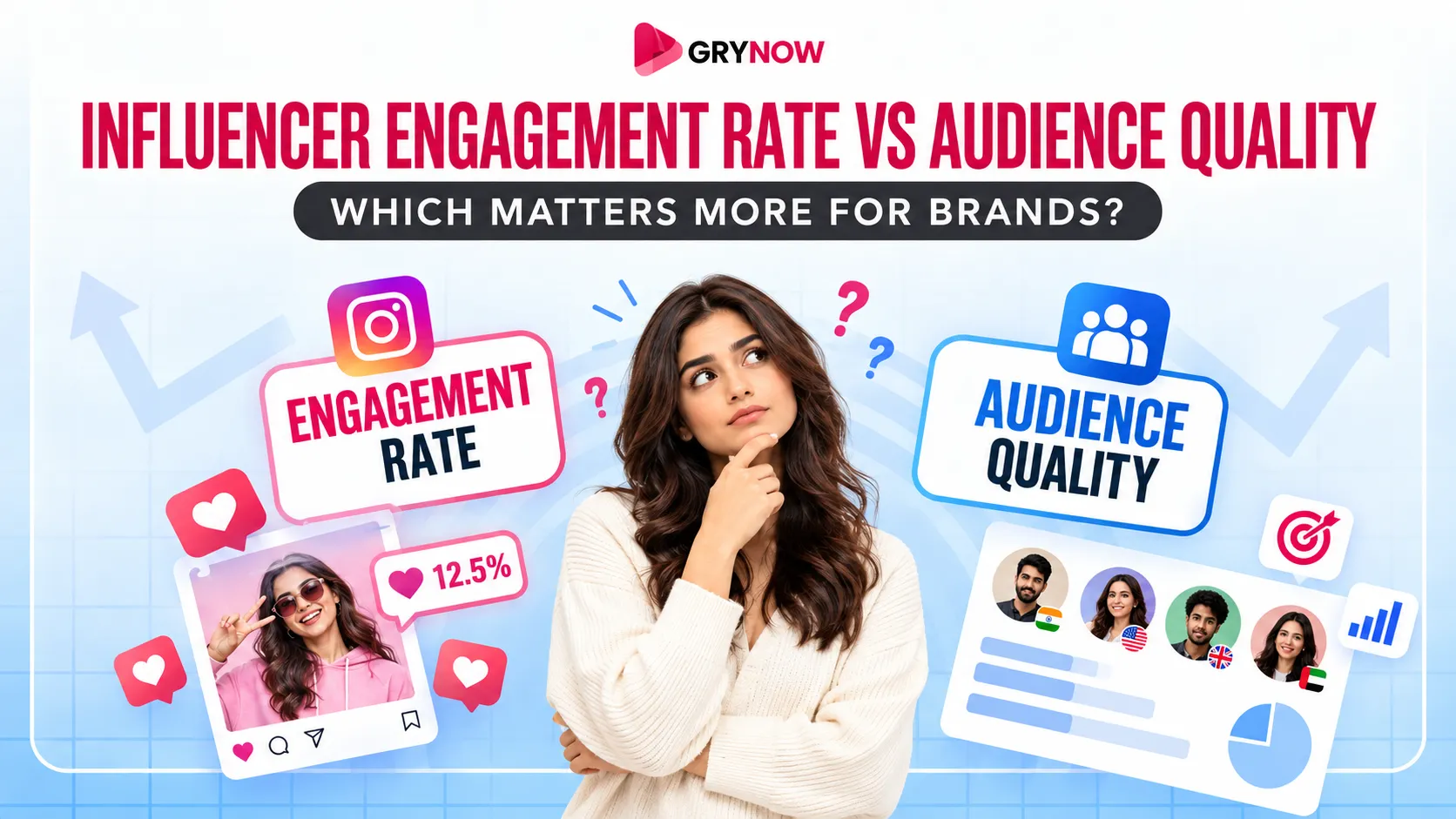
Two metrics often dominate that decision: engagement rate and audience quality.
A creator may have an impressive engagement rate, but if their audience doesn't match your target customers, those numbers may not translate into sales. On the other hand, a creator can have a highly relevant audience but struggle to get that audience to interact with their content.
So, when choosing an influencer, which matters more: engagement rate or audience quality?
Let's break down both before answering that.
Quick Answer: Engagement Rate vs Audience Quality
For most targeted influencer campaigns, audience quality should be the first filter. It tells you whether a creator's followers are relevant, authentic, and aligned with your target customers. Engagement rate should then be used to understand whether that relevant audience is actually paying attention and interacting with the creator's content.
In simple terms:
Audience quality tells you who you're reaching. Engagement rate tells you how actively they're responding.
Both matter, but they answer different questions.
What Is Engagement Rate?
Engagement rate measures how much interaction a creator's content receives relative to their audience or reach. Depending on the platform or analytics tool, it can be calculated by comparing metrics such as likes, comments, shares, and saves to followers, reach, or impressions.
One commonly used formula is:
Engagement Rate = (Likes + Comments + Shares + Saves) ÷ Followers × 100
For example, a creator with 50,000 followers and a 6% engagement rate may appear more active than a creator with 500,000 followers and a 1% engagement rate.
Industry data also shows that engagement rates can vary significantly by influencer tier. Digital Applied reports average engagement of around 3.86% for micro-influencers compared with roughly 1.21% for mega- and macro-tier creators. (Source: Digital Applied)
That's one reason brands often look beyond follower count when selecting creators.
But engagement rate has a major blind spot: it doesn't tell you who is engaging.
Comment pods, engagement bait, purchased likes, and other artificial tactics can inflate engagement without creating genuine interest in the product.
A creator might have an impressive 8% engagement rate and still struggle to generate sales if the people interacting with their content have little interest in what the brand is selling.
Engagement rate tells you how much an audience is interacting. It doesn't tell you whether that audience is the right one for your brand.
If a campaign generates strong-looking engagement but disappointing business results, brands should also look at factors such as audience relevance, content fit, and conversion tracking to address the High Followers, Low Results issue.
What Is Audience Quality?
The tricky part is that audience quality is harder to measure at a glance.
It takes actual digging, such as reviewing audience demographics reports, follower authenticity checks, and looking at who's genuinely interacting with creators' content. Unlike engagement rate, audience quality isn’t represented by one simple percentage.
Audience quality answers a different question:
Who exactly is following this creator, and how closely does that audience match the people you want to reach?
This can include factors such as:
- Location
- Age group
- Gender
- Interests
- Language
- Audience authenticity
- Category relevance
- Potential purchasing power
For example, a skincare brand targeting urban women aged 22–35 gets limited value from a creator whose audience is primarily teenagers in a different region, even if the creator has an excellent engagement rate.
The numbers may look impressive, but they're impressive for someone else's target audience.
Audience quality also means looking beyond demographics. Brands need to understand whether followers are real, active, relevant, and genuinely interested in the creator's content.
A creator with a large following can still have a significant number of inactive or suspicious accounts. One study cited by SociaVault found that 37% of influencer followers showed signs of being fake, bot-driven, or otherwise inauthentic.
That's why follower count alone isn't enough to judge the potential value of a creator.
That’s why audience quality isn't something you can understand from a profile page at a glance. It requires deeper analysis of demographics, follower authenticity, audience interests, and engagement patterns.
How Can a Brand Check Influencer Audience Quality?
Checking audience quality requires a little more digging than simply looking at follower count and engagement rate.
Brands can use several checks to understand whether a creator's audience is genuine and relevant.
1. Check for Fake Followers and Audience Fraud
Tools such as MyWall can help brands analyse a creator's audience and identify potential fake followers, suspicious activity, and other authenticity signals.
This matters because a large follower count doesn't necessarily represent the number of people who can realistically see or respond to a campaign.
2. Analyse Audience Demographics
When creators provide access to their native Instagram or YouTube insights, brands can review information such as:
- Age
- Gender
- Location
- Interests
- Audience distribution
Some platforms can also provide audience analysis that helps brands compare a creator's audience with their target customer.
For example, if your campaign targets customers in India but most of a creator's audience is outside India, the creator may not be the right fit, even if their engagement looks strong.
3. Look at Follower Growth
Follower growth can provide another useful authenticity signal.
Brands should look at historical growth patterns; sudden and unexplained jumps in followers can be worth investigating, particularly when it doesn't appear to correspond with a viral piece of content or another identifiable event.
The goal isn't to reject a creator based on one unusual spike. Instead, look at the overall pattern and investigate anything that doesn't make sense.
4. Review the Quality of Comments
Don't just count comments. Read them.
Are people actually discussing the content? Are they asking questions, sharing experiences, or tagging relevant people? Or are most comments generic responses that don't indicate genuine interest?
This small check can tell you a lot about whether the engagement is meaningful.
5. Check Category and Audience Relevance
Finally, ask a simple question:
Would this creator's audience realistically care about this product?
A creator doesn't have to work exclusively within one category, but there should be a clear connection between their content, audience interests, and your campaign.
These checks don't take long individually, but together they give brands a much clearer picture of the creator they're considering.
For a broader creator-selection process covering discovery, shortlisting, and brand fit, explore the 10 proven ways on how to find the right influencer for your brand.
Influencer Evaluation Framework: What Should Brands Check First?
Instead of judging a creator based on one number, brands can follow a simple evaluation order:
1. Audience Relevance
Does the creator's audience match the campaign's target location, age group, interests and customer profile?
2. Audience Authenticity
Are the followers and interactions genuine? Look for suspicious follower patterns, unusual growth spikes and low-quality engagement.
3. Engagement Consistency
Once the audience is relevant and authentic, check whether the creator consistently receives meaningful engagement.
4. Content and Category Relevance
Does the creator's content naturally fit the product category? A strong audience match becomes more useful when the creator can introduce the product in a way that makes sense for their content.
5. Previous Campaign Performance
Look beyond views and likes. Where available, review metrics such as clicks, leads, conversions, saves, shares, or other campaign-specific outcomes.
This order helps brands avoid putting too much weight on a single metric.
Engagement Rate vs Audience Quality: Which Matters More?
For most target campaigns, audience quality should be the first filter. A creator with a smaller, relevant, authentic audience is usually a stronger starting point than a creator with impressive engagement but an audience that doesn't match your target customer.
However, engagement rate still matters. Once you've established that the audience is relevant and authentic, engagement rate helps you understand whether that audience is actually paying attention to the creator.
In simple terms:
Audience quality decides who's in the room. Engagement rate tells you if they're listening.
The two metrics aren't competitors. They answer different questions and work best when evaluated together.
| Factor | Engagement Rate | Audience Quality |
|---|---|---|
| What it measures | Audience interaction with content | Relevance and authenticity of the audience |
| Looks at | Likes, comments, shares, saves and other interactions | Age, location, gender, interests and authenticity |
| Easy to compare? | Relatively easy | Requires deeper analysis |
| Can it be manipulated? | Yes | Fake followers can distort audience size and quality |
| Main purpose | Understand audience response | Determine audience fit |
| Role in creator selection | Secondary validation | Primary filter |
Use Audience Quality as the First Filter
Before looking too closely at engagement numbers, check whether the creator's followers actually overlap with your target customers.
A high engagement rate on a completely mismatched audience is still a mismatch.
For example, imagine two creators:
Creator A: 100,000 followers, 7% engagement, but only 15% of the audience matches your target market.
Creator B: 40,000 followers, 4% engagement, but 70% of the audience matches your target market.
For a highly targeted campaign, Creator B may have significantly more potential despite having fewer followers and a lower engagement rate.
The point isn't that smaller creators are always better. It's that relevance should come before impressive-looking numbers.
Use Engagement Rate to Validate Audience Attention
Once you've established that the audience is relevant, engagement rate becomes a useful second check.
A creator with a well-matched audience but consistently weak engagement may not be connecting effectively with their followers.
Look for consistent engagement, rather than being impressed by one unusually high-performing post.
A creator with a modest but stable engagement rate can be a stronger option than someone whose numbers fluctuate dramatically from post to post.
Look for a Mismatch Between the Two
The relationship between audience quality and engagement rate can reveal potential red flags.
- High engagement + poor audience fit: The creator may generate plenty of interaction, but the campaign could struggle to reach potential customers.
- Strong audience fit + very low engagement: The creator may reach the right people, but their content isn't generating much response.
- Strong audience fit + consistent engagement: This is the combination brands should ideally look for.
Consider the Campaign Objective
The importance of each metric can also depend on what you're trying to achieve.
For brand awareness, a broader relevant audience with strong engagement can work well because visibility and attention are key objectives.
For lead generation or sales, audience quality usually becomes even more important because the people seeing the content need to have a realistic reason and ability to purchase.
For niche products, audience relevance may matter more than overall audience size.
For mass-market products, reach and engagement may carry more weight.
There is no single formula that works for every campaign.
Track Both Metrics Over Multiple Campaigns
Don't judge a creator only by one post or one campaign.
If a creator consistently reaches the right audience and generates genuine engagement across multiple collaborations, that's a much stronger signal than one viral post.
Over time, brands can build a clearer picture of which creators consistently deliver the right combination of:
Audience relevance + authenticity + engagement + campaign performance
Where campaign data is available, brands should also look beyond engagement and connect creator activity with the actual campaign objective.
For example, a sales campaign may need to consider clicks, conversions or revenue, while an awareness campaign may focus more heavily on reach, views and engagement.
Conclusion
Engagement rate and audience quality answer two different questions. Audience quality shows whether a creator reaches the right people, while engagement rate shows how actively those people interact with the content.
For most targeted campaigns, start by checking audience relevance and authenticity, then use engagement rate to evaluate audience attention.
The right creator isn't necessarily the one with the biggest following or highest engagement rate; it's the one whose audience fits your brand and genuinely engages with their content.
To find the right creator and create an effective influencer campaign, you need support with creator selection and campaign execution. Working with an influencer management agency in India can help you evaluate creators based on both metrics and your campaign goals.