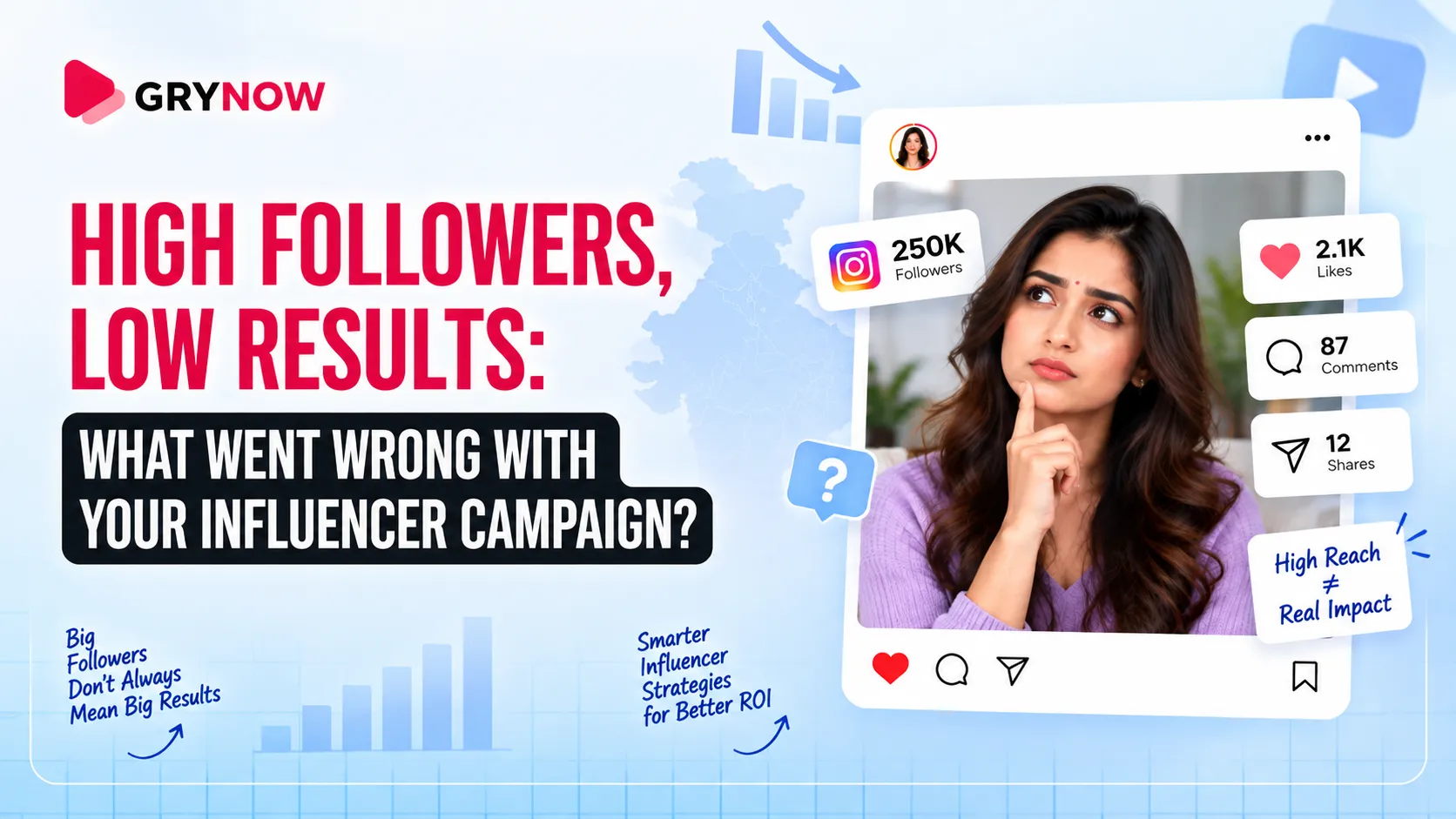
If your influencer campaign produced disappointing likes, comments, or sales despite the creator's massive follower count, the problem may not be the follower count alone. The audience may not have been the right fit, the content may not have connected with viewers, or the campaign may have made it difficult for interested people to take the next step.
Follower count can indicate potential reach, but it doesn't tell you whether an audience is relevant, attentive, or likely to act. This article walks through how to diagnose what went wrong before you commit a budget to another campaign, especially if you're troubleshooting an influencer campaign that generated reach but failed to deliver meaningful results.
The Follower Trap: Why Big Numbers Don't Guarantee Campaign Results
Follower count is the easiest number to see, so it's often the one brands anchor to when picking a creator. But a large following doesn't automatically translate into attention, engagement, or sales.
An influencer with a huge following can still get disappointing campaign results because their audience may not be relevant to the product, the sponsored content may not fit their usual style, or the campaign may not give viewers a clear reason to act.
MyWall's analysis of a sample of 20 creators found engagement rates ranging from 0.06% to 4.96% among accounts in the same broad "mega-influencer" tier (over one million followers). Two creators can have similar audience sizes and still produce very different levels of interaction.
So is a low engagement rate after a campaign normal, or a red flag? It depends on the creator, campaign objective, content format, and audience rather than a single universal benchmark. If your campaign produced significantly weaker results than the creator's previous content or similar creators in the same campaign, it's worth investigating instead of assuming that a large account should automatically perform well.
Fake or Inflated Followers: One Possible Reason for the Mismatch
An inflated or inactive audience can make a creator's follower count look stronger than their actual reachable audience. Bot accounts or followers acquired through questionable methods may contribute little to views, engagement, or conversions.
Rather than treating any single signal as proof of fake followers, brands should look for a consistent pattern when reviewing a creator's history:
- Engagement that is unusually low for the creator's size: A large account that consistently receives very limited interaction may deserve closer examination.
- Follower count that spiked suddenly: A sharp, unexplained increase without a clear viral moment, major collaboration, or other reason can be worth investigating.
- Comment sections full of generic responses: Repeated comments such as "nice," "wow," or emoji-only replies may provide less useful evidence of genuine audience interest than detailed, relevant conversations.
- Unusual follower profiles: A sample of followers with little activity or suspiciously similar account patterns can be another signal.
- Mismatched geography or language: If a creator's content is clearly aimed at one market but their audience appears concentrated elsewhere, check whether that audience is actually useful for your campaign.
None of these signs alone proves that an audience is fake or inflated. They are signals that may warrant a deeper creator audit to find the right influencer for your brand.
Mismatched Audience: When Followers Aren't Your Customers
Even a completely real and active audience can produce weak campaign results if they aren't your target customer. This is one of the biggest limitations of choosing creators primarily by follower count: a creator can have people who genuinely enjoy their content but still have little relevance to your product.
Niche relevance matters here. Consider an account built around a specific professional or local service, such as a dermatology clinic's page: it can accumulate a very large following, but an audience interested in that specific subject may have little reason to respond to an unrelated product or lifestyle campaign.
The same logic applies to creators built around trading content, gaming, fitness, beauty, or another specific niche. Their followers came for a particular type of content, and a campaign that falls outside that expectation may struggle regardless of how large the account is.
To understand whether audience mismatch contributed to a poor campaign result, look back at:
- What does this creator normally post about, and did the product fit naturally into that content?
- Did the creator's previous sponsored content in a similar category receive meaningful engagement?
- Did the campaign reach the locations, demographics, or customer groups the brand actually wanted?
- Did the people interacting with the post show genuine interest in the product?
A creator whose audience only loosely overlaps with your customer base can still produce views and likes, but that attention may not translate into meaningful actions.
Content That Doesn't Feel Native: The Creative Mismatch Problem
Even with a real, well-matched audience, content that reads as an advertisement rather than a genuine recommendation can underperform.
People follow creators for a particular tone, format, personality, or type of content. If sponsored content feels completely different from what the creator normally publishes, the audience may be less likely to engage with it.
This is visible in the spread of engagement rates across creators of similar size. Even among creators with more than one million followers, engagement can vary significantly. While the dataset doesn't break down which specific posts were promotional versus organic, the variation shows why campaign performance shouldn't be judged from follower count alone.
If your creative brief locked the creator into brand-approved phrasing, forced product callouts, or a format the creator doesn't normally use, that may have contributed to a post that generated views but little interaction.
The practical test is simple: if you removed the brand name, would the post still sound like something that the creator would genuinely say to their audience? If not, the audience may have noticed the disconnect too.
What to Review Before You Pay for Another Post
The causes above audience mismatch, creative mismatch, and potentially inflated or inactive audiences are things brands should review before committing budget to another campaign.
Instead of looking only at follower count, compare the creator's previous campaign performance and the actual results from your own campaign:
- Engagement compared with previous content: Did the sponsored post perform significantly differently from the creator's usual content?
- Audience relevance: Did the people reached by the campaign match the brand's target customer?
- Previous sponsored-post performance: How did similar brand collaborations perform compared with the creator's organic content?
- Creative fit: Did the creator have enough flexibility to communicate the product naturally?
- Conversion setup: Were trackable links, promo codes, or UTM parameters available before the campaign went live?
These checks can help determine whether the issue was the creator, the creative approach, the audience, or the conversion setup rather than assuming that the follower count was the only problem.
Reading Your Campaign Report: Metrics That Actually Matter
Before your next campaign, agree on which metrics will actually tell you whether it worked, because follower count and raw like-counts won't tell the whole story.
Engagement rate, calculated on the actual post rather than relying only on the account average, helps you understand how audiences responded to the content. Compare the campaign's performance with the creator's previous content and the campaign's objective rather than relying on one universal benchmark.
Reach versus impressions matters because reach tells you how many unique accounts saw the post, while impressions include repeat views. A campaign report that only shows impressions can make performance look stronger than it actually was; ask for reach specifically.
Conversion tracking, meaning unique promo codes, trackable links, or landing-page traffic tied specifically to the campaign, is what allows you to connect social activity to actual business outcomes rather than assuming likes translate to sales. If your last campaign report didn't include this, that's a gap worth fixing before you run another one.
If you're evaluating a campaign report right now and want to measure and maximize influencer marketing ROI, compare the results across the creator, content, audience, and conversion journey. That makes it easier to identify whether the problem was the creator itself, the way the campaign was executed, or what happened after people interacted with the content. Working with an experienced influencer marketing agency can also help brands bring these checks into the campaign planning and execution process from the start.