If you've spent any time searching for a UGC video agency, you've probably noticed the same problem many brand marketers run into: there are plenty of vendors offering UGC production, but it isn't always easy to tell how to compare them.
A polished portfolio can look impressive, but it doesn't necessarily tell you how an agency handles creator sourcing, briefing, production timelines, revisions, usage rights, or final delivery.
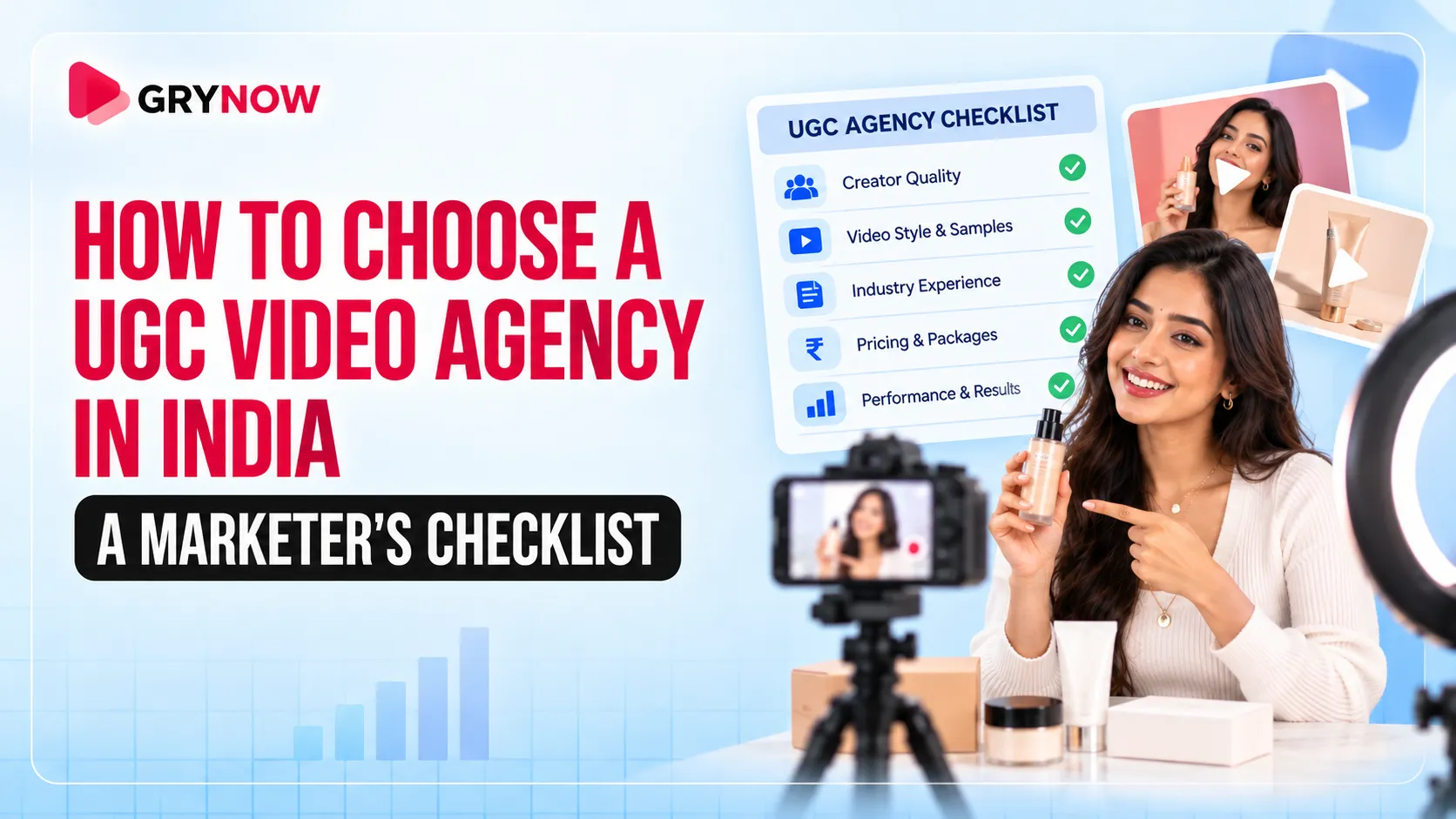
Before you shortlist a UGC agency, it helps to know exactly what to evaluate. This checklist breaks down the factors that can affect the quality, efficiency, and overall value of your UGC production partnership.
What to Look for in a UGC Video Agency
There is no single UGC video agency that will be the right fit for every brand. A D2C skincare brand producing dozens of videos every month for paid ads may have very different requirements from a B2B SaaS company looking for a few testimonial-style videos.
The more useful question is not which agency is "the best," but which agency's process, creator network, production capabilities, and pricing fit the way your brand needs to create and use content.
Before taking a sales call, evaluate each agency against the following criteria.
1. Portfolio Depth in Your Category, Not Just Quantity
A large showreel means little if none of the work is relevant to your industry. Look for UGC video production examples in your category, whether that's beauty and personal care, food and beverage, fashion, apps, fintech, or D2C.
Pay attention to the quality of the hook, creator delivery, product integration, editing style, and whether the content feels appropriate for the platform where you intend to use it.
2. Creator Network Size and Diversity
UGC depends on having access to creators who can deliver different styles rather than simply having the largest possible database. Ask how creators are sourced, whether they are vetted for camera presence and delivery, and whether you can approve them before production. It's also worth looking at the top UGC creators in India to understand the range of creator styles, niches, and presentation formats available.
A diverse creator network can be particularly useful when you need to test different demographics, languages, personalities, or creative angles.
3. Turnaround Time and Production Process
UGC is often used for rapid creative testing, so a long production cycle can limit how quickly your brand can launch and test new concepts.
Ask for a realistic timeline from brief to final delivery. Find out whether the quoted turnaround includes creator sourcing, scripting, filming, editing, revisions, and final approvals.
A good production process should make each stage clear rather than simply promising a "fast turnaround."
4. Pricing Transparency
UGC pricing can vary significantly depending on video length, number of creators, production requirements, editing, revisions, and usage rights. You don't necessarily need an exact price before the first discussion, but you should understand what factors influence the final cost.
Ask whether creator fees, editing, revisions, reshoots, and usage rights are included in the quoted price. A transparent breakdown makes it easier to compare agencies fairly.
5. Usage Rights and Content Ownership
Usage rights are one of the most important things to clarify before signing.
Confirm whether you receive organic usage rights, paid advertising rights, or broader commercial usage. Also check the duration of those rights, the platforms covered, geographic restrictions, and whether raw footage is included.
Don't assume that paying for a video automatically gives your brand unlimited rights to use it everywhere. The agreed terms should be clearly documented in the contract.
6. Briefing and Creative Direction Process
A reliable UGC agency should have a structured briefing process rather than simply sending products to creators and waiting for submissions.
Ask how the agency develops concepts, provides scripts or talking points, communicates brand guidelines, and reviews creator submissions. You should also understand how much creative direction the agency provides while still allowing the content to feel natural.
7. Revision and Reshoot Policy
Before production begins, find out how many revision rounds are included and what happens when content does not meet the original brief.
Also clarify the difference between an edit revision and a reshoot. If a creator misses an important talking point or fails to follow the agreed brief, you should know whether the agency handles the correction within the original scope or charges an additional fee.
8. Communication and Project Management
UGC production can involve multiple creators, scripts, products, deadlines, approvals, and final assets. Without clear project ownership, even a good creative concept can become difficult to manage.
Ask whether you'll have a dedicated point of contact, who manages creator communication, how approvals are handled, and where final assets and project documentation will be shared.
| Criteria | Why It Matters |
|---|---|
| Category-relevant portfolio | Helps assess creative fit and production quality |
| Creator network diversity | Enables different creator styles, demographics, and creative angles |
| Turnaround time | Determines how quickly you can produce and test content |
| Pricing transparency | Reduces unexpected costs and scope issues |
| Usage rights clarity | Defines how and where your content can be used |
| Briefing process | Helps maintain brand consistency while keeping content natural |
| Revision policy | Prevents confusion around edits and reshoots |
| Communication and project management | Keeps creators, approvals, and deliverables organized |
Types of UGC Agencies in India
Not every UGC provider operates in the same way. Understanding the main types can help you identify what kind of partner your brand actually needs.
- Dedicated UGC video production companies: These agencies focus primarily on creator sourcing, UGC production, editing, and delivery. They can be a practical option when UGC is a significant part of your content strategy.
- Hybrid influencer and UGC agencies: These agencies manage both influencer campaigns and UGC production. They can be useful when you need creator-led reach as well as content assets for paid or organic use.
- Freelance creator networks and marketplaces: These connect brands with individual creators, often giving brands more direct control over creator selection. The trade-off is that more of the briefing, coordination, quality control, and project management may sit with the brand.
When comparing these options, focus on the capabilities you actually need rather than choosing an agency based only on its category or size.
What Real UGC Campaign Execution Looks Like
Once you know what to evaluate, looking at real campaign execution can make the process easier. Here are two examples that demonstrate different approaches to UGC campaign execution.
Neolayr Vitamin C: Building Variety Through Creators and Content Formats
The Neolayr Vitamin C UGC video campaign is a useful example of how creator and content diversity can be built into one campaign.
The campaign involved 15 lifestyle, beauty, skincare, and dermatology influencers across micro and mega tiers. The content included formats such as ASMR, educational videos, product explanations, dermatology-focused content, and other creative styles.
The campaign delivered 15 videos, 5.2M+ views, and 9% engagement.
Sony Bravia X90L: Combining Scripting, Casting and Production
The Sony Bravia X90L UGC awareness campaign demonstrates a different side of UGC production: translating product features into different real-life scenarios through structured creative development.
The campaign used 15 creators such as a gamer, wildlife photographer, middle-aged group of friends, people aged 60+, and a cinema enthusiast. The process included brainstorming concepts, developing scripts around Sony Bravia's product USPs, casting people based on different user profiles, studio production, creative direction, and in-house post-production.
The campaign generated 3.4M total views with 9.8% engagement.
For a brand evaluating a UGC agency, this type of campaign highlights why creator diversity and format flexibility are worth checking. An agency should be able to explain how it selects creators and adapts content formats to the product rather than simply providing a large creator database.
UGC Video Agency vs. Influencer Agency: What's the Difference?
This distinction is important because the two services overlap, but they solve different marketing needs.
A UGC agency in India focuses on producing authentic-feeling video content that a brand can use across channels such as paid ads, social media, websites, and product pages. The creator's personal following is usually not the primary reason they are selected. You're primarily paying for content production.
An influencer agency focuses on campaigns distributed through creators' existing audiences. Follower demographics, reach, engagement, and audience fit become important because you're paying for access to the creator's distribution and influence.
Some agencies offer both services, so don't judge the offering by the label alone. Ask whether the campaign is designed primarily to produce content assets, reach an existing creator audience, or combine both.
Red Flags to Watch for Before Signing
Even a strong portfolio doesn't guarantee that an agency will be the right production partner. Watch for these warning signs:
- No written usage rights clause: If the contract doesn't clearly explain how and where you can use the footage, clarify the terms before signing.
- Unwillingness to share relevant work: An agency should be able to show examples that demonstrate the type of content it can produce for your category.
- Vague pricing: If you're given a single number without understanding what's included, ask about creator fees, editing, revisions, reshoots, and usage rights.
- No clarity on creator rights: Make sure the agency can explain how creator consent and commercial usage rights are handled.
- Overpromising virality: UGC can support awareness, engagement, and performance marketing, but no agency can guarantee that a particular video will go viral.
- No clear project owner: If you don't know who is responsible for your brief, approvals, and final delivery, communication problems can quickly affect the project.
- No defined revision or reshoot process: Clarify what happens when the first submission doesn't meet the agreed brief.
Questions to Ask a UGC Agency Before You Sign
Before signing with a UGC agency, ask a few direct questions:
- How do you source and vet creators?
- Can I approve creators before production begins?
- How do you brief creators while keeping the content natural?
- What is your typical turnaround for a batch of five to ten videos?
- What is included in the quoted price?
- What usage rights do I receive?
- How many revision rounds are included?
- What happens if a creator's first submission doesn't meet the brief?
- Who owns the final and raw footage?
- Who will be my main point of contact throughout the project?
The answers can give you a much clearer understanding of the agency's process than a portfolio alone.
How to Make Your Final Decision
Once you've applied the evaluation criteria and shortlisted two or three agencies, you can narrow your decision down through a practical process:
- Request a sample brief-to-delivery timeline based on your actual product category rather than a generic estimate.
- Ask for two or three relevant portfolio examples instead of relying only on the agency's general showreel.
- Get pricing and usage rights in writing before production begins.
- Clarify revisions and reshoots so you know what happens if the first submission doesn't meet the brief.
- Run a small pilot with a handful of videos before committing to a larger monthly volume.
- Revisit the evaluation checklist after the pilot and compare the agency's actual performance with what was promised.
The goal isn't to find an agency that simply claims to be the best. It's to find a partner whose creator network, production process, pricing, rights, communication, and creative capabilities fit the way your brand needs to create content.
A structured evaluation makes that comparison much easier and helps you choose a UGC agency based on how it actually works, rather than how polished its sales pitch or portfolio looks.